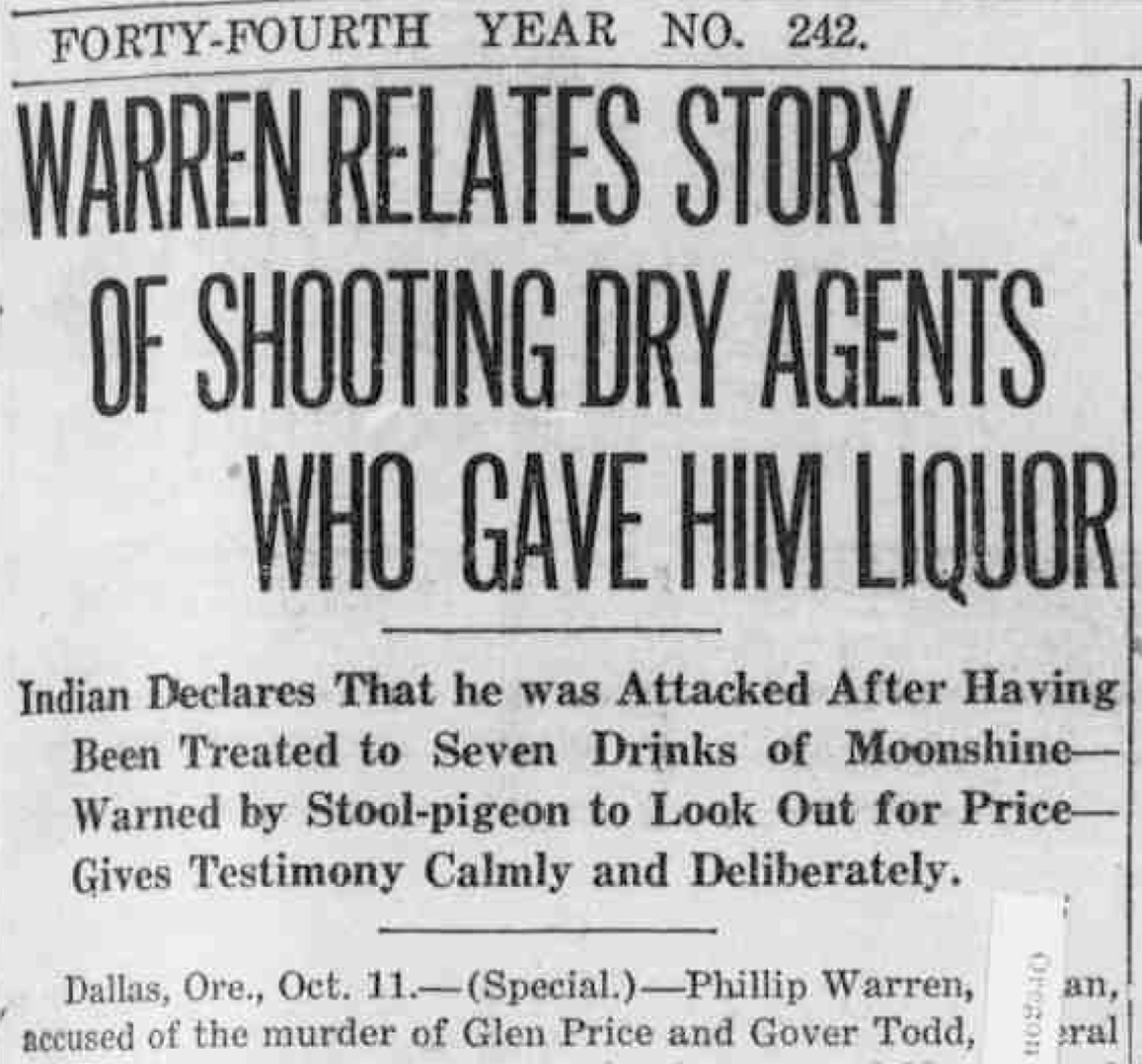
“You needn’t be afraid of us,” Perry assured them. “I’m a moonshiner and bootlegger too.” But he’d run low on liquor that night, he added; did they know someone who might get them a little more booze to keep the party going? Warren asked around, and finally found someone willing to sell him a pint of homemade blue ruin. This he brought back and sold to agent Price for $2. Only then — after having had six or seven drinks with Warren and Petite — did agent Price make the arrest. But, according to Warren and Petite, agent Price never actually identified himself as a federal agent. He just pulled his gun and ordered Warren and Petite to get in the car. 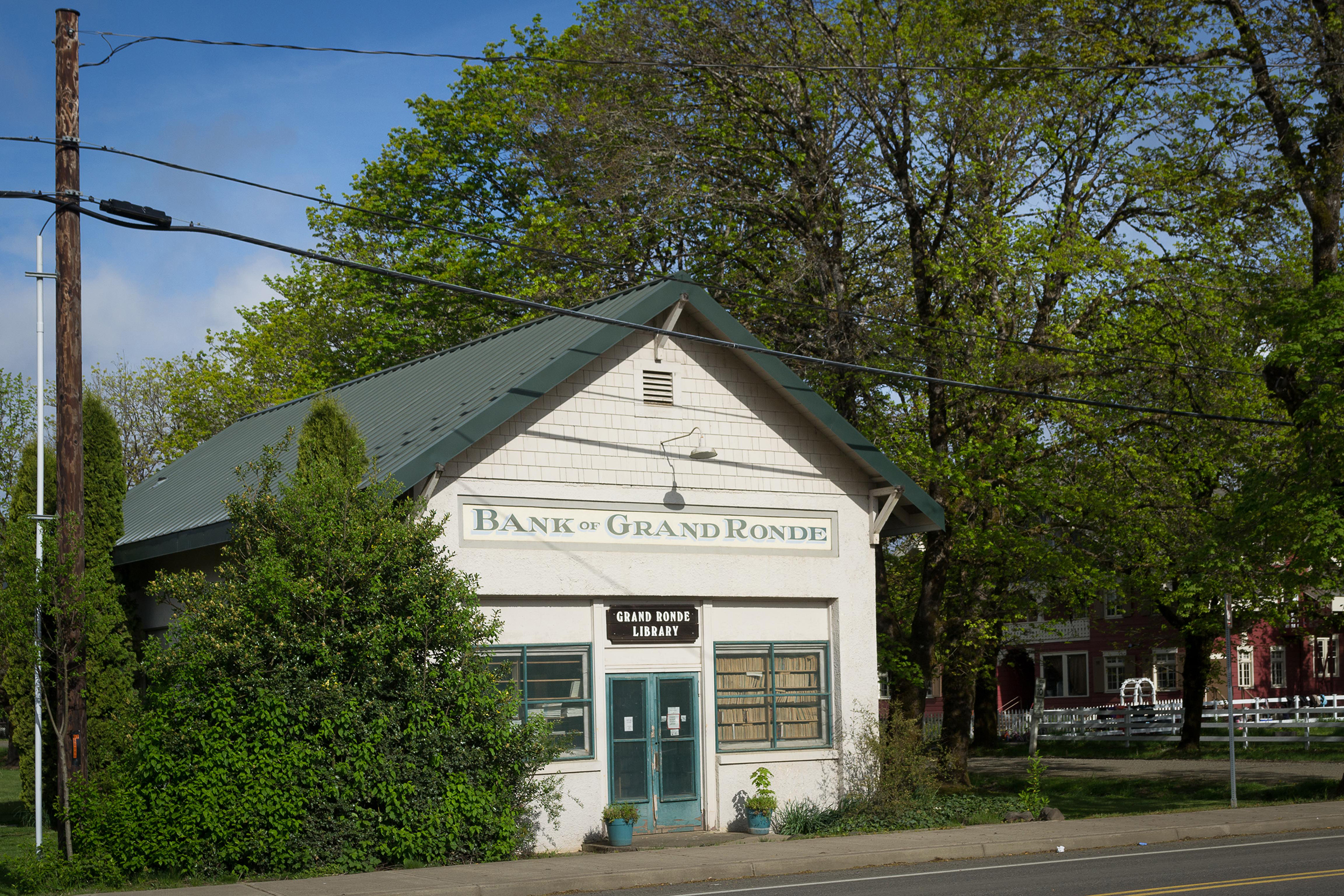
The Grand Ronde Public Library as it appeared on a summer day in 2013. (Image: Visitor7/Wikimedia Commons)Thinking they were being kidnapped by gangsters or something, Warren and Petite panicked. Petite broke first, leaping over the car and diving off into the night. Warren took advantage of the distraction to sock Price in the jaw. Price responded by pistol-whipping Warren, stunning him and covering his face with blood. When he recovered, Warren thought he’d been shot in the head. Moonshiner Perry was unable to detain him in the car, but, obviously seeing he was broiling mad and eager for revenge on agent Price, warned him to be careful — Price, he said, would not hesitate to shoot him. Warren went straight home, got his .25-35, and stormed back to the car. He later testified, in court, that he had no intention of murdering anyone; but he got the rifle for protection, since agent Price was armed, and he wanted to have a talk with him. On the way, he stepped into the restaurant where one of the out-of-towners — the agents’ chauffeur — was tucking into a late-evening supper. Pointing the rifle in his general direction, he demanded to know where Price was. “What’s the matter, someone run over you?” the stranger said. “They’ll find out,” growled Warren, and moved on toward the car. At the car, agent Price tried to ambush him, grabbing the barrel of the rifle and bringing his pistol up into Warren’s face. Warren heard a click. Backstepping and tearing his rifle loose from the other’s grip, he gave him two doses — the second one fatal. One of the other agents now got his pistol out and started firing on Warren. He got four shots off before the gun jammed, including one that hit Warren in the hip. Apparently not knowing where the gunshots were coming from, Warren then shot agent Todd, who was crawling around the car either to get away from Warren or to ambush him. Then he went home.
|
One other detail seemed to stick in the jurors’ craws. After agents Price and Todd were shot, neighbors rushed to the scene to try to save their lives if they could. The men — not yet dead, but dying — were carried to a nearby garage and those with some medical training did what they could. While they were doing that, neighbor Inongus Bonouch testified, E.W. Holden, the off-duty deputy, got out a bottle and started passing it around. Gus Winslow, one of the neighbors who was carrying the fallen agents and trying to stop the bleeding, testified that deputy Holden actually tried to offer him a bottle while he was working on the patient.
IN LIGHT OF these revelations, the jury struggled to figure out what to do. Two men were dead — but could they really call it murder? It seemed more like a gun fight that had been started by the losing party. Warren testified that if he’d known the four men were federal agents, he would have submitted to arrest; but they never told him, so he fought for his life. In the end, the verdict was Not Guilty in the murder of agent Grover Todd. And, when the government tried again with a whole new trial for the shooting of agent Price, that charge didn’t stick either. The editorial board of the Salem Capitol Journal spoke for most observers of the case in an editorial published after the verdict: “The system followed by the slain officers was that customarily used by special dry officers seeking victims in order to make a record of arrests,” the newspaper wrote. “Coercion, intimidation, and corruption were the methods employed, and as no booze was handy, the officers supplied it. For the ensuing shooting affray, they were as much to blame as anyone. “It does not serve the law’s end to enter into conspiracies to induce others to become lawbreakers,” the editorial continued. “It is no part of a prohibition enforcement officer’s duty to get drunk with his victim and consume the evidence … The purpose of Prohibition is to stop the manufacture and sale of liquor, not merely to fill jails — a fact frequently lost sight of.”
|