Working with Weatherly apparently in a sort of informal partnership, Bruckman launched the Pacific Coast Cone Co. in 1908, several years before he perfected his cone-making machine; and he threw himself into the quest. He’d sampled a number of hand-made ice-cream cones and cone-like contrivances at various world fairs and expositions over the previous few years, and found some (but by no means all) of them quite tasty; but the process of making them just wasn’t scalable. What was needed was a steam- or electric-powered machine capable of making hundreds of cones per hour, so that they would be “within reach of the child who had only an occasional nickel to spend for sweets,” as he put it in a 1917 interview with Western Confectioner Magazine. 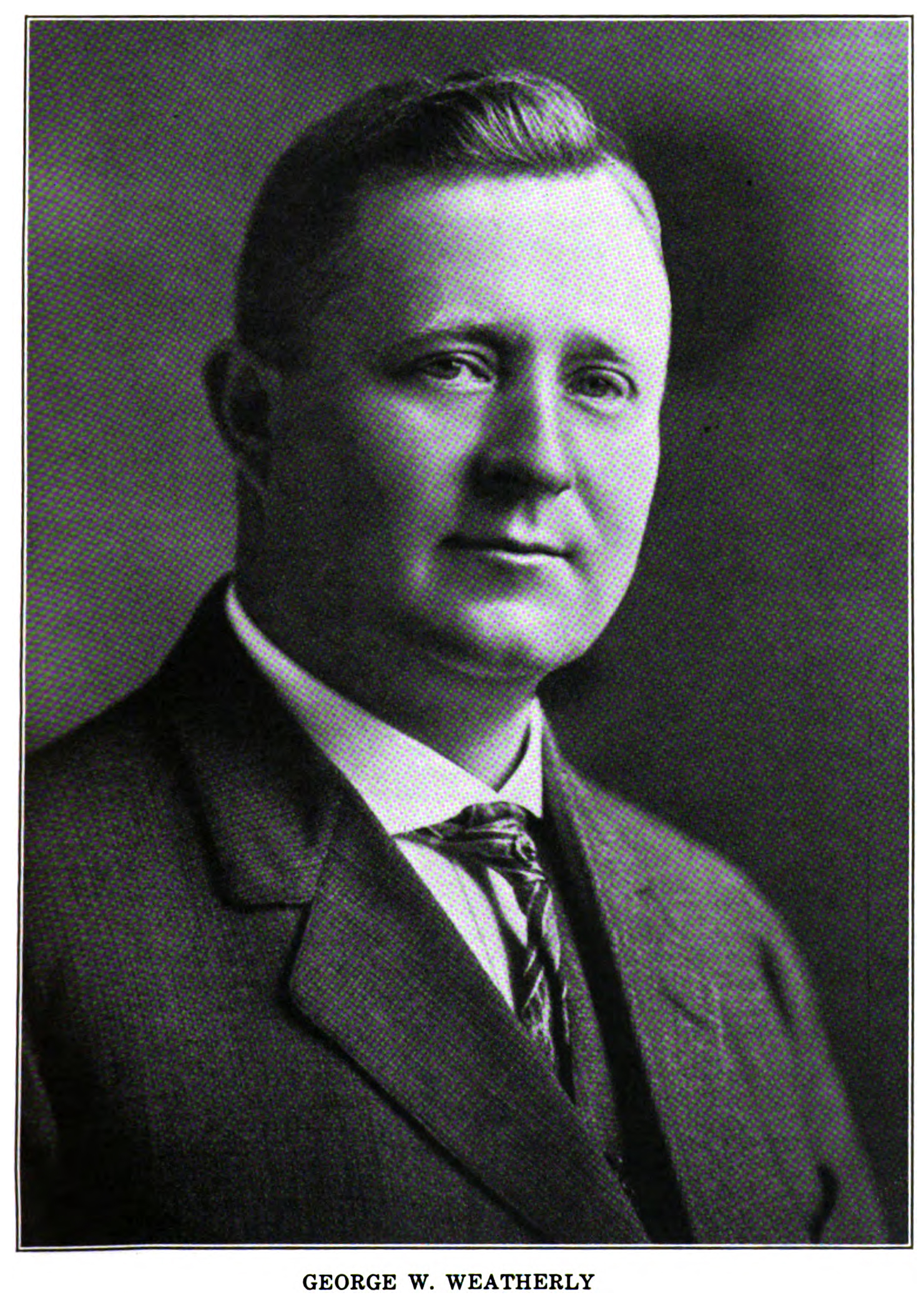
George Weatherly as he appeared in the late 1920s, just about the time he was going into the pheasant business. (Image: S.J. Clarke Publishing)The problem was getting the cones to drop out of the machine without human intervention. One night he watched his wife making timbale crusts — baking a batter carefully in a cup-shaped mould, picking it carefully out before adding filling — for refreshments at a card party she was hosting the following day. She carefully picked the crusts out of the little molds, taking exquisite care that they should remain perfect. Now, he mused, how can I automate that? He also watched the construction of one of the bridges across the Willamette River — food historian Heather Arndt Anderson observes that this was probably the Hawthorne Bridge, which was built in 1910 — and it gave him the idea of using a cross-hatch “waffle” pattern to strengthen the cone. The pattern would cause the cone to stick in the mould — and solving that problem led him to the major breakthrough, which was a two-piece mould that would pull away automatically, letting the finished cone drop right out. Another aspect of Bruckman’s cones is less discussed in the historical record, but it was clearly a huge factor in his success: The flavor profile of his cone batter. Put simply, it was very nearly perfect, right from the start. We can’t be far off in attributing the recipe to Bruckman’s wife, Hettie May (Drais) Bruckman. Someone who makes her own timbale cases, with such exquisite care, for a card party the following day, is clearly no mean pastry chef. For a creamery engineer like Bruckman to get the pastry recipe as right as he did on the first go — and mind you, that recipe is still in use to this day! — would be nearly inconceivable. 
A box of Nabisco’s Comet ice cream cones. Comet sugar cones are reportedly still made with Bruckman’s original recipe. (Image: Nabisco)In any case, get it right they did, and finally, on July 20, 1912 — 103 years to the day from the time of this writing — Bruckman and Weatherly jointly filed the patent on the world’s first machine-made ice cream cone. And then, of course, having the protection of an applied-for patent, they went directly into business — lots of business. By 1915 they were cranking out nearly 1 billion cones a year from their factory.
BOTH WEATHERLY AND Bruckman were well-off business owners already. But the invention of the cone machine made both of them stupendously wealthy.
|
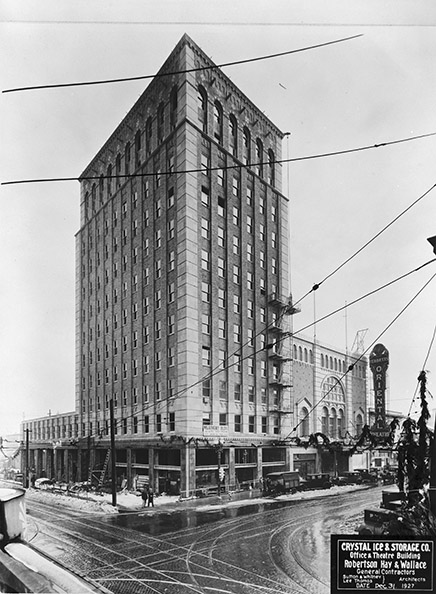
In 1958, Frederick Bruckman died at age 85 in a nursing home in Salem. As for Weatherly, he had an even more eventful “second act.” In 1925, his company merged with Western Dairy Products of Seattle, and Weatherly basically retired from regular involvement, staying on as chairman of the board at Western. At the same time, he turned to a real-estate development project, which resulted in the 12-story Weatherly Building, which still stands today on the same spot where his little confectionery store was at the start of his ice-cream adventure. 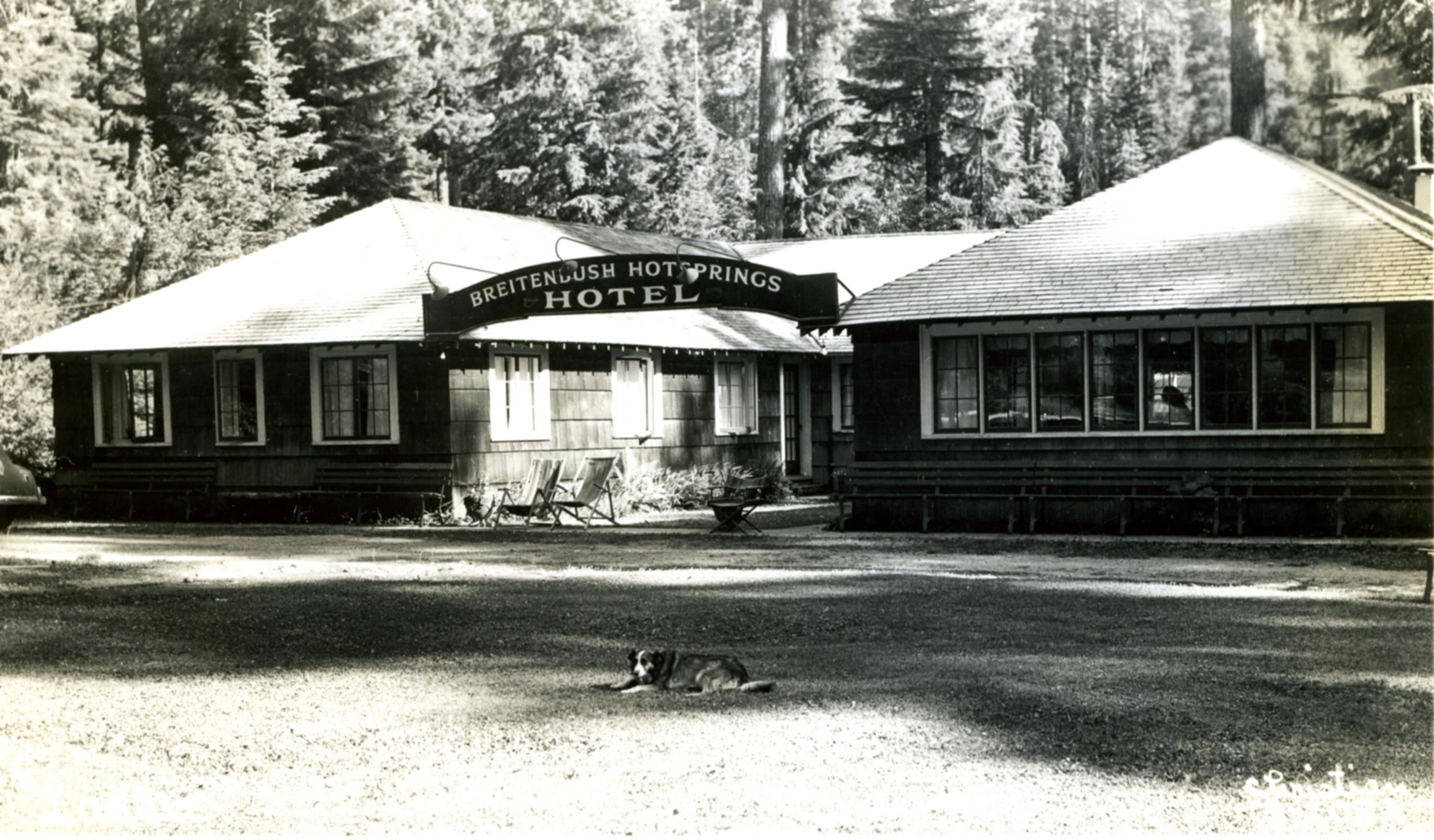
Breitenbush Hot Springs lodge as it appeared in the mid-1950s, during the time the Bruckman family owned it. (Image: OSU Libraries)After that, Weatherly tried an experiment with pheasant farming, setting up a small operation on two acres near Multnomah. The market for these toothsome gamebirds turning out to be tolerably strong, he limbered up his check-writing hand and dove into the business on a huge scale. He and some investors bought 100 acres at Springdale, east of Troutdale along the Columbia River Highway, and started raising pheasants by the truckload there. He called the place Weatherly Farms. Most of the pheasants they raised at Weatherly Farms ended up on dining tables at places like The Arlington Club, Multnomah Hotel, and Meier & Frank’s Georgian Room. Many were also shipped to other cities around the West. Weatherly died of a stroke in 1948 at age 80, and was buried in Rose City Cemetery.
I MENTIONED THAT the original ice-cream cone recipe, which was likely crafted by Hettie May Bruckman, is still in use today. In 1925, Nabisco bought out Bruckman and Weatherly’s patent for the cone machine, and put it to good use cranking out “Comet” brand cones. These are still in stores today, and several years ago Saveur Magazine named the Comet America’s best-tasting sugar cone. So, next time the ice-cream bug bites you, you know what to do!
|